
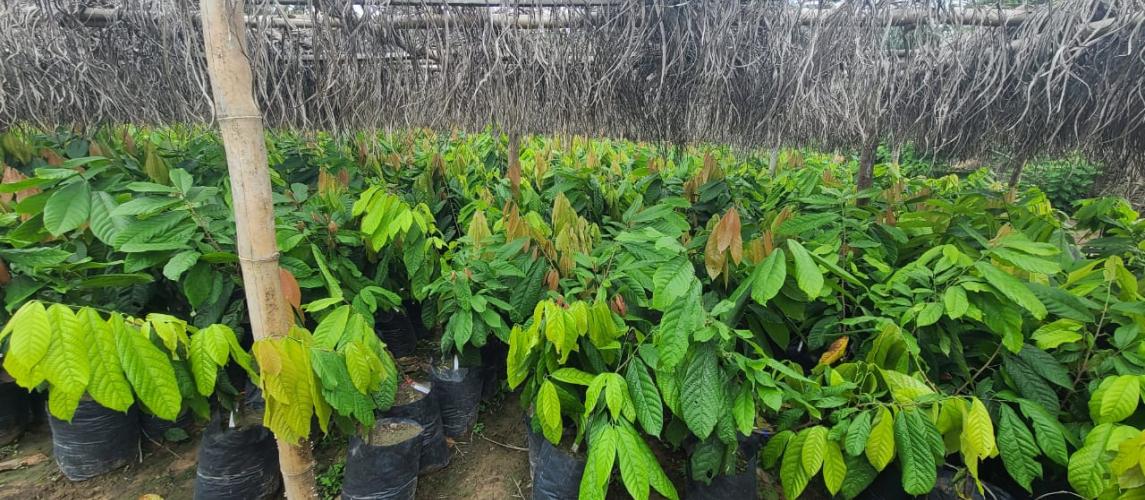

In the rich landscapes of Beeplay, Nimba County, a quiet revolution is unfolding—one that is reshaping Liberia’s agricultural sector and paving the way for economic empowerment. At the heart of this transformation lies the country’s first National Cocoa Seed Garden, a groundbreaking initiative launched in 2020 through a collaboration between the Ministry of Agriculture, the Central Agricultural Research Institute (CARI), and the International Fund for Agricultural Development (IFAD).
Spanning 30 hectares of fertile land, this pioneering project is not just about cultivating cocoa but about fostering sustainability, self-reliance, and prosperity for Liberia’s smallholder farmers. By locally producing high-quality hybrid cocoa seeds, the initiative is revolutionizing the cocoa industry, empowering farmers, and positioning Liberia as a competitive player in the global cocoa market.
For decades, Liberian cocoa farmers struggled with the high cost and inconsistent quality of imported cocoa seeds. Limited access to reliable planting materials led to low productivity and stifled profitability. The National Cocoa Seed Garden is changing this reality.
“This seed garden will eliminate the challenges smallholder farmers face in acquiring substandard planting materials from other countries,” explained Charles King Jr., the project’s supervisor. “With these locally developed hybrids, farmers can now access high-quality, ecologically friendly, and reliable seeds.”
In the garden, nearly 20,000 bud grafted cocoa trees planted across 18 hectares, many of which are already flowering and bearing pods. These new hybrids mature faster—within 18 months to three years compared to the traditional three-to-four-year cycle. More impressively, it projected that productivity will increase from 100–200 kg per hectare to an astonishing 300–700 kg per hectare.
Cocoa farming in Liberia is more than just an occupation—it’s a lifeline for thousands of smallholder farmers. The National Cocoa Seed Garden is designed to uplift these farmers by providing them with these improved varieties they need to succeed.
The hybrid seeds are specifically tailored to thrive in Liberia’s unique environmental conditions, ensuring resilience and adaptability. But beyond their ecological benefits, these seeds represent hope and economic empowerment, allowing farmers to cultivate wealth within their communities.
Aligned with Liberia’s National Agriculture Development Plan (NADP), known as the "Liberians, Feed Yourselves" agenda, this initiative is about more than productivity—it’s about fostering self-sufficiency and sustainable economic growth. The first batch of hybrid seeds is currently being trialed with farmers in Bong, Lofa, and Nimba counties, marking the beginning of a new era in Liberian cocoa farming. At full capacity, the National Cocoa Seed Garden will support the cultivation of over 3,500 hectares of cocoa annually.
Beyond improving farming practices, the National Cocoa Seed Garden serves as a strategic engine for economic growth and foreign trade. By supporting 3,500 hectares of cocoa cultivation each year, it strengthens Liberia’s agricultural foundation while boosting rural economies.
Darlington F. Doe, Head of Monitoring and Evaluation for IFAD-funded projects at the Ministry of Agriculture, underscored the initiative’s impact: “The National Cocoa Seed Garden will have a significant impact on Liberia’s cocoa sector. It will revitalize cocoa farming, increase farmers’ access to hybrid seeds, reduce dependency on imported seeds, and contribute to national economic growth and foreign trade,” he stated
Agriculture Minister Dr. J. Alexander Nuetah sees the National Cocoa Seed Garden as a crucial part of Liberia’s strategy to expand its tree crop industry and increase global competitiveness. “I am passionate about the National Cocoa Seed Garden. It will be essential in establishing cocoa seed nurseries nationwide and advancing our tree crop agenda,” he stated
The transformation of Liberia’s cocoa industry is just beginning, but the seeds of hope have already been planted. Charles King Jr. captured the project’s essence perfectly: "Through this garden, we are not just growing cocoa; we are cultivating hope and opportunity for generations to come."
IFAD Country Director Madam Pascaline Barankeba expressed her optimism for Liberia’s agricultural future. She highlighted the country’s fertile land and favorable climate, emphasizing the potential for national development through sustainable farming. "We share a vision—to transform Liberia’s agriculture sector so that tomorrow, this country will thrive. A strong agricultural sector generates income, supports education, strengthens health systems, and fuels national development."
With increased cocoa production, Liberia is poised to boost foreign exchange earnings, create jobs, and strengthen rural communities—marking a critical step toward self-reliance and economic prosperity.
The National Cocoa Seed Garden is more than an agricultural endeavor—it is a story of triumph, transformation, and hope. It embodies Liberia’s resilience and commitment to agricultural innovation. As this garden continues to flourish, so will the promise of a brighter, self-sufficient future for Liberian farmers and the nation as a whole
